
In Finland, the sauna is not a luxury, it’s a birthright. With over 3 million saunas for a population of 5.5 million people, Finland holds the remarkable distinction of having more saunas than cars. But what makes Finnish sauna culture truly extraordinary isn’t the heat, it’s what happens inside it.
The Great Equalizer
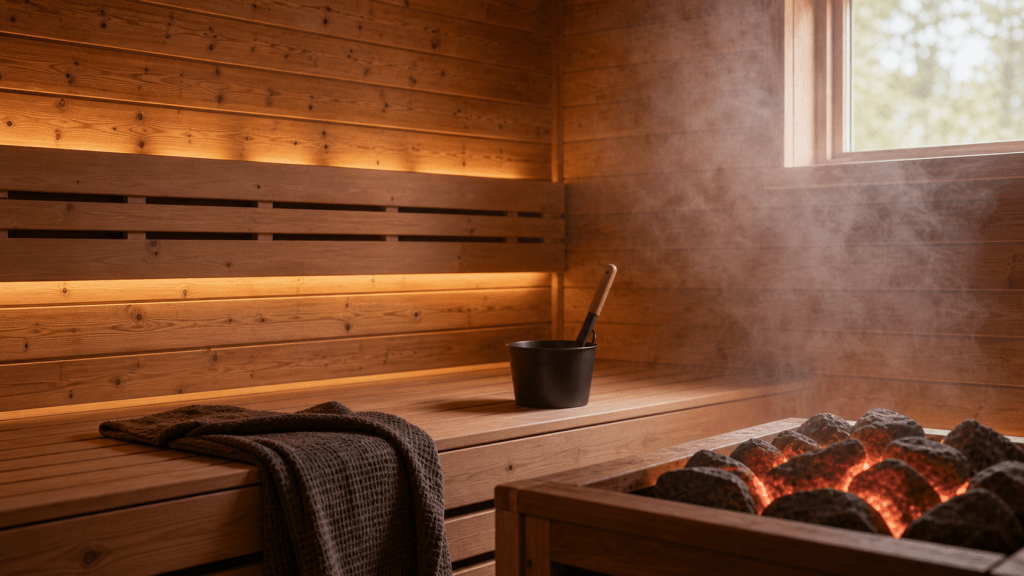
Strip away the suits, titles, and social hierarchies, and you’re left with something raw and human. That’s exactly what the Finnish sauna does. When people sit together in nothing but a towel at 80–100°C, rank disappears. A CEO and a janitor share the same bench, breathe the same steam, and speak the same language of vulnerability. This phenomenon has a name in Finnish sociology: tasa-arvo, equality.
This is no accident. Finnish culture has long used the sauna as neutral ground. Historians note that major labor negotiations and even wartime diplomacy in Finland were conducted in saunas. During World War II, Finnish military leaders used sauna sessions to foster camaraderie and strategic thinking. Today, corporate Finland maintains this tradition, many large companies have executive saunas, and it’s common to invite international business partners for a saunailta (sauna evening) before signing major contracts.
Why Heat Creates Honesty
There’s a physiological reason why people open up in saunas. Heat triggers the release of oxytocin, the so-called “bonding hormone”, and lowers cortisol levels. Combine that with the sensory deprivation of a dim, quiet room, and you create a space where defenses naturally drop. Psychologists have compared it to the phenomenon of people confiding in strangers on long flights, but far more intentional.
In Finnish, there’s even a word for the unique honesty of the sauna: saunahenki, meaning “sauna spirit.” It refers to the unspoken agreement that what’s said in the sauna stays in the sauna, a code of trust that makes authentic conversation possible.
Sauna Diplomacy on the World Stage
Finland’s sauna diplomacy extends beyond its borders. Finnish embassies around the world are famously equipped with saunas, used as tools of soft power. Former U.S. President George W. Bush and Russian President Vladimir Putin both reportedly experienced Finnish-hosted sauna diplomacy at the 2002 summit. The Finnish government considers the sauna an official cultural export — a strategic asset as much as a wellness tool.
What the World Can Learn
As remote work and digital communication erode authentic human connection, the sauna model offers a compelling alternative. Companies in Sweden, Germany, and even the United States are beginning to incorporate communal heat spaces into their workplace culture, not for relaxation alone, but to rebuild the kind of trust that emails and Zoom calls simply cannot generate.
The sauna teaches one timeless lesson: shared discomfort creates lasting bonds. In a world obsessed with comfort, perhaps it’s time to embrace the heat.
