
Extreme cold conditions present unique challenges for wood-fired hot tub owners, but with proper techniques, your tub can perform efficiently even when temperatures plummet below -30°C (-22°F). Understanding thermal dynamics and implementing strategic maintenance protocols ensures year-round enjoyment in harsh winter environments.
Pre-Season Winterization Essentials
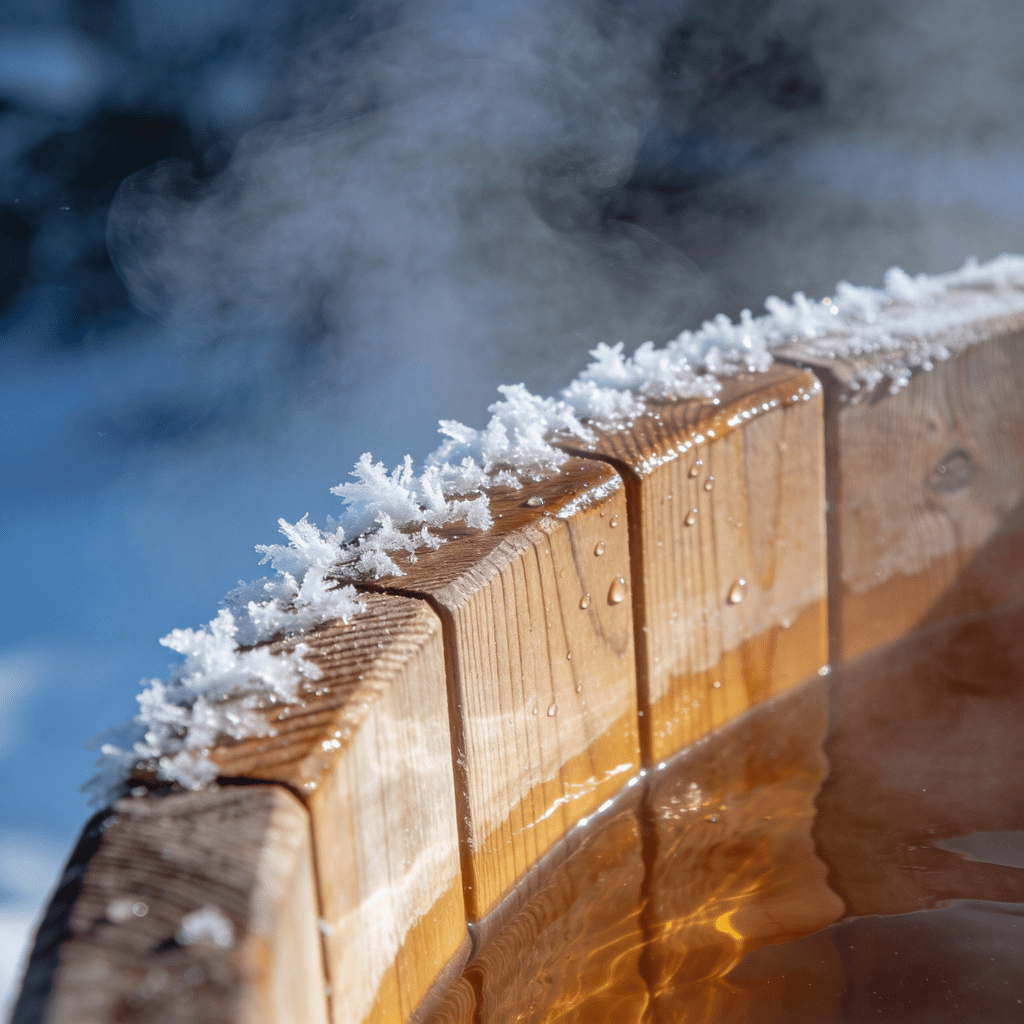
Before the deep freeze arrives, inspect all components for vulnerabilities that cold exacerbates. Check wood staves for gaps wider than 2mm, as extreme temperature fluctuations cause significant expansion and contraction cycles. Apply food-grade beeswax to exterior surfaces, creating a moisture barrier that prevents ice formation in wood grain. Insulate your stove pipe with high-temperature ceramic blanket wrap rated to 1200°C, reducing heat loss by up to 40% during frigid conditions.
Maintaining Optimal Water Temperature
In extreme cold, your firing strategy must adapt significantly. Start fires 4-6 hours before use rather than the standard 2-3 hours, as ambient temperatures below -30°C drain heat rapidly from both water and metal components. Use seasoned hardwoods exclusively—birch, oak, and ash provide sustained heat output of 27-30 million BTUs per cord compared to softwoods’ 17-20 million BTUs. Maintain water levels at maximum capacity, as greater water volume resists temperature drops more effectively than partially filled tubs.
Preventing Ice Formation and Damage
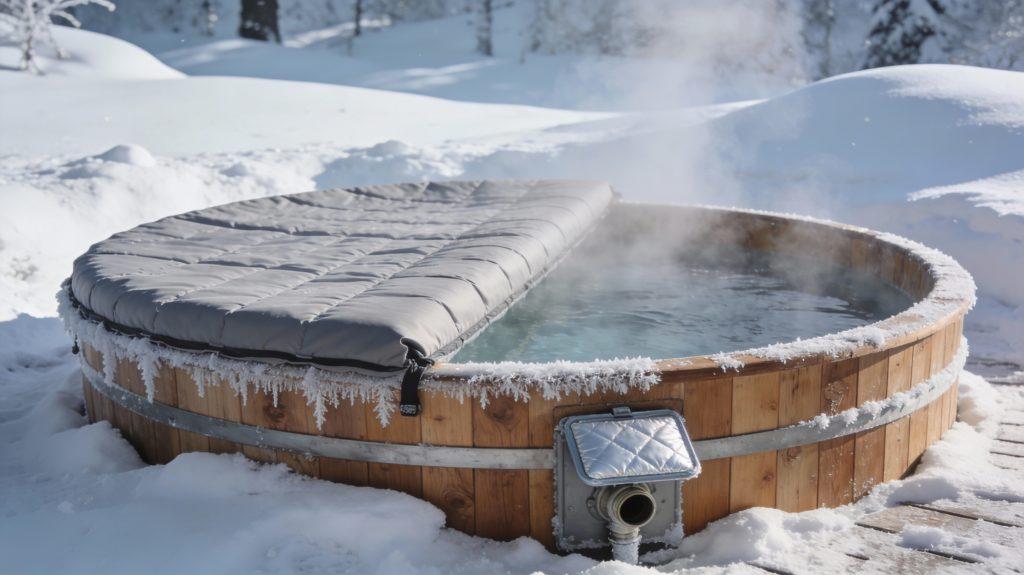
Never allow your tub to sit empty in extreme cold, as ice can form in residual water pockets and crack wood staves. If you must drain between uses, complete a full drainage followed by a thorough towel-dry of all surfaces within 30 minutes. Install a floating thermal blanket rated for -40°C when the tub is heating or between soaking sessions—this single addition can reduce heat loss by 60-75%. For overnight temperature maintenance, add one log every 90 minutes to keep water above 35°C, preventing surface ice while conserving fuel.
Emergency Cold-Snap Protocols
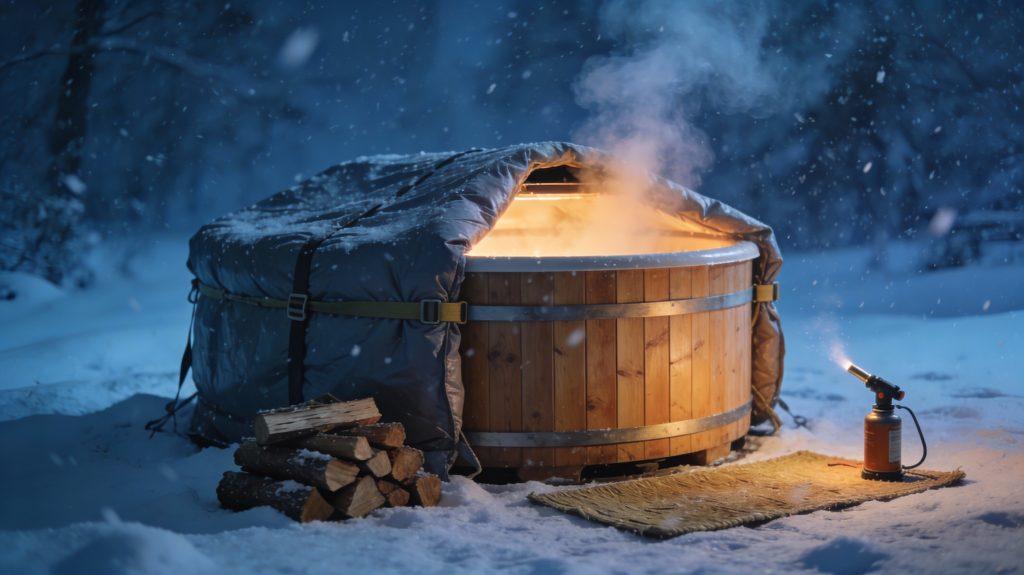
When temperatures unexpectedly drop below -35°C, implement emergency measures immediately. Wrap the entire tub exterior with insulated tarps or moving blankets, securing them above the waterline to trap radiant heat. If your water temperature drops below 25°C and won’t recover, add boiling water from an indoor source—10-15 liters of boiling water can raise a 1,000-liter tub by 5-7°C. Keep a backup propane torch available to thaw frozen valves or drain plugs, applying heat in 10-second intervals to prevent thermal shock to metal components.
Material Considerations for Arctic Performance
Not all wood species perform equally in extreme cold. Cedar and thermowood-treated pine maintain dimensional stability down to -40°C, while untreated pine can develop stress fractures below -25°C. Stainless steel hardware outperforms galvanized options in preventing cold-induced brittleness. Consider upgrading to a larger firebox model if you regularly experience temperatures below -30°C—a 25% larger combustion chamber reduces firing frequency and maintains more consistent temperatures in hostile conditions.
